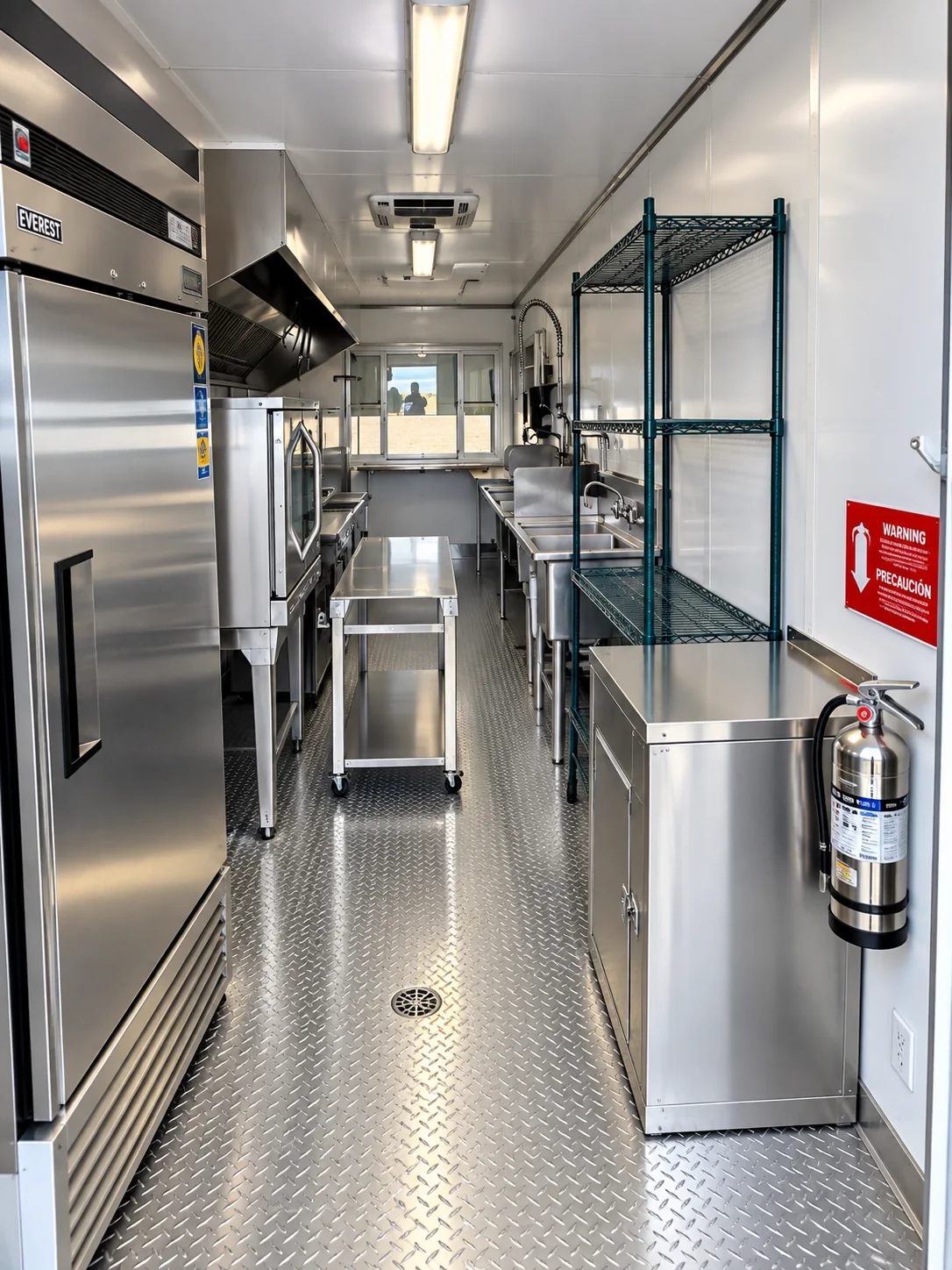
24ft Mobile Kitchen
Bring the everyday menu to the smallest listed kitchen option. Review how the cooking line, preparation work, and cold storage would fit the tasks your team needs to relocate.
View kitchen details
Healthcare and education campuses, correctional facilities, and government or military kitchens may need temporary food service during renovations, closures, remote-site work, or emergency response. We rent mobile kitchen trailers across Alabama, with service coverage that includes Birmingham, Huntsville, and Montgomery. Portable dishwashing trailers and refrigeration facilities are available to support the kitchen plan. Share the address, meal schedule, utilities, and operating dates; our team provides 24/7 support and emergency deployment coordination.
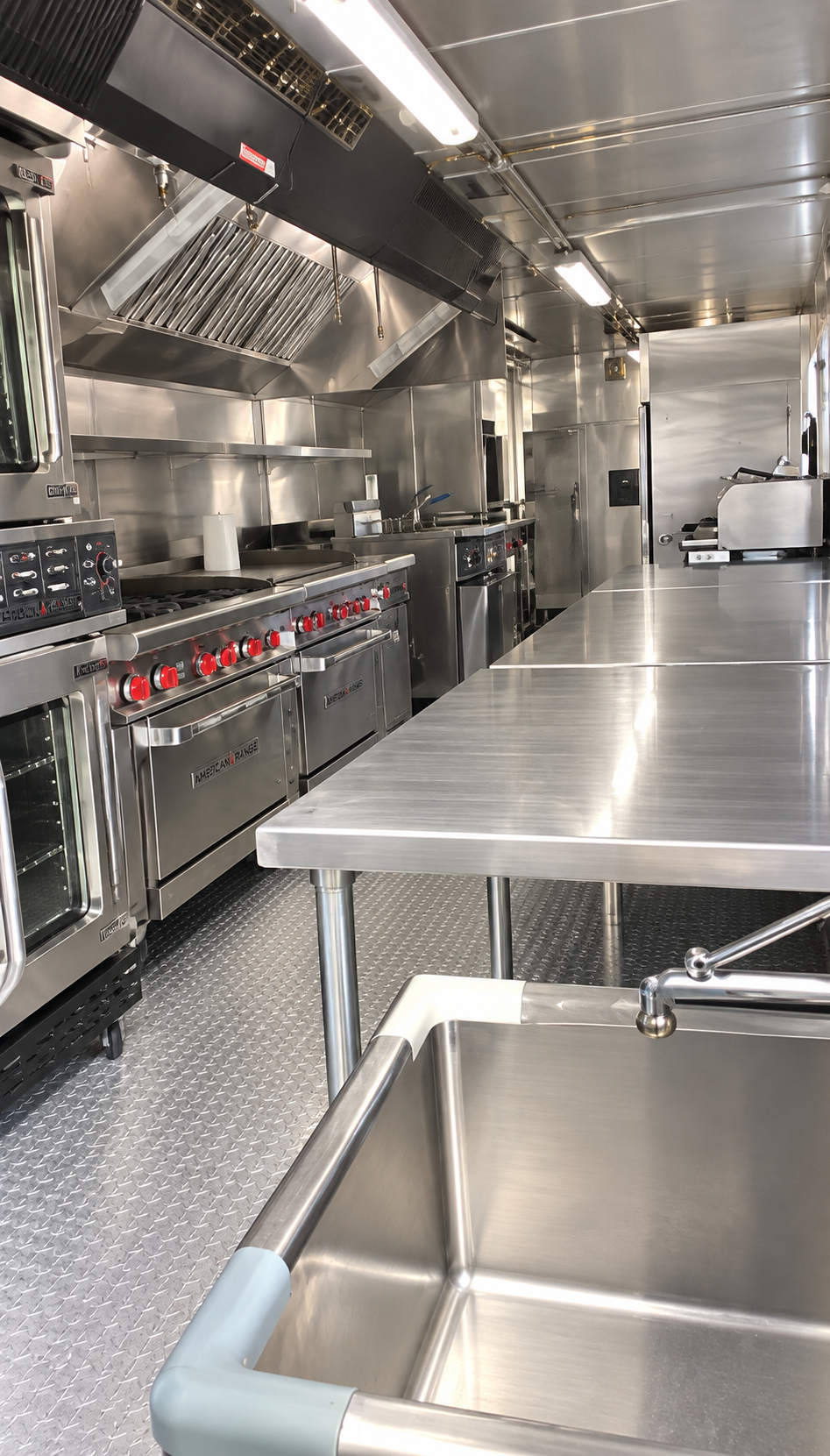
Look at the appliance schedule and the floor plan together. Compare how each size would accommodate preparation, cooking, staff movement, and collection at your busiest service.
Bring the everyday menu to the smallest listed kitchen option. Review how the cooking line, preparation work, and cold storage would fit the tasks your team needs to relocate.
View kitchen details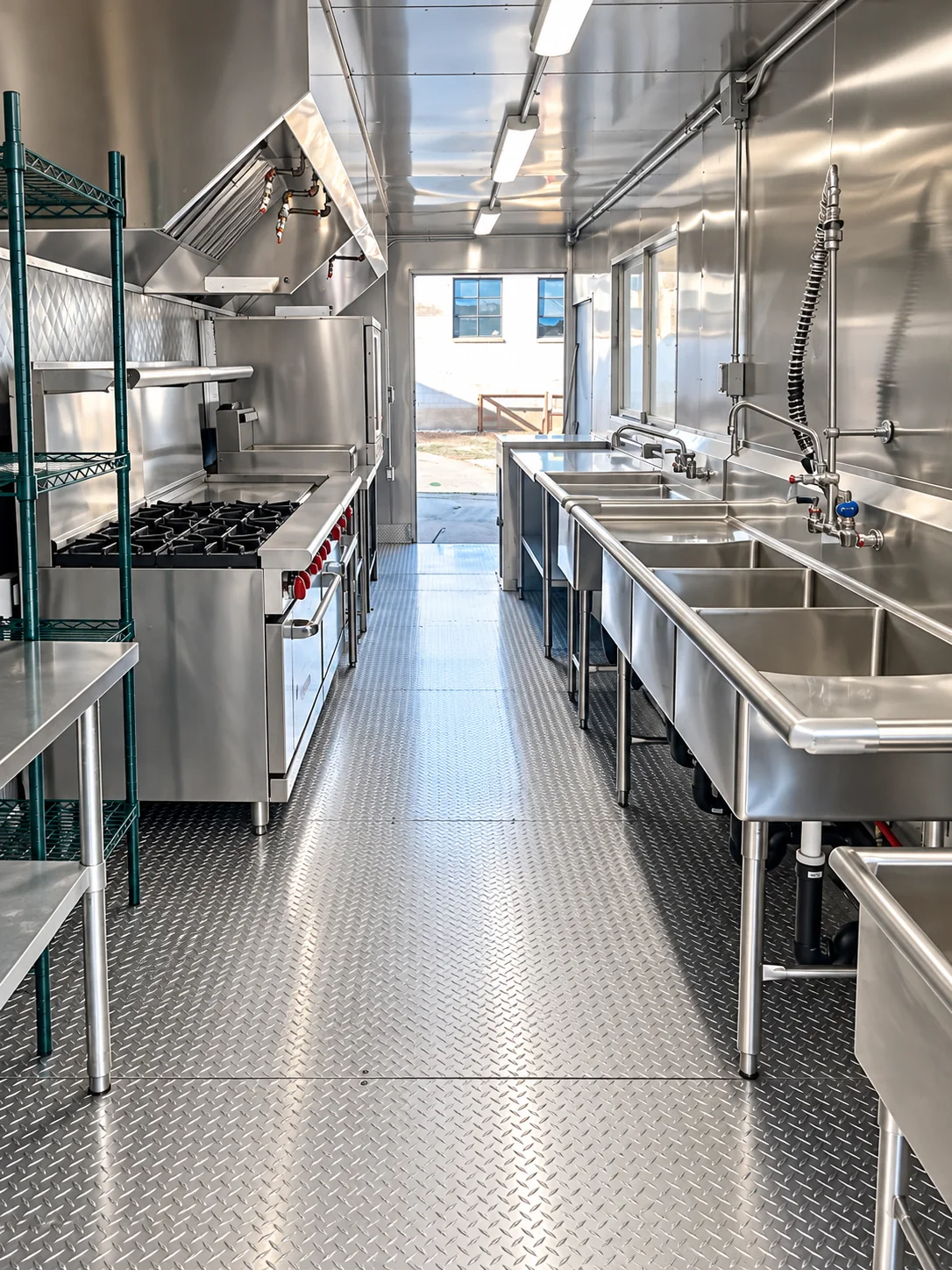
Compare the equipment positions with the busiest preparation period. Account for staff working together, ingredients arriving at the line, and meals leaving for service.
View kitchen details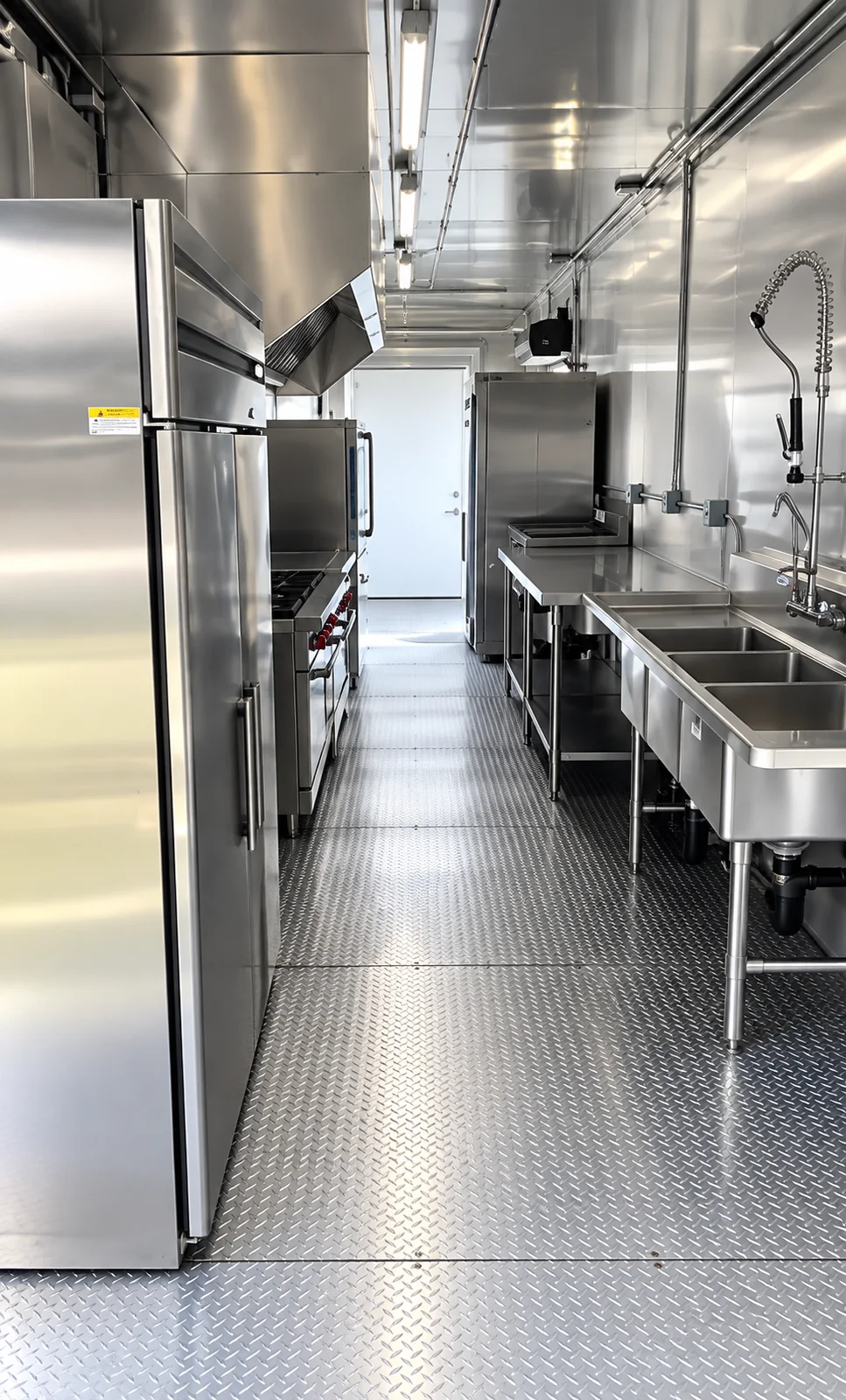
Use the floor plan to discuss several tasks happening at once. Keep the route between receiving, preparation, cooking, and food collection in the comparison.
View kitchen details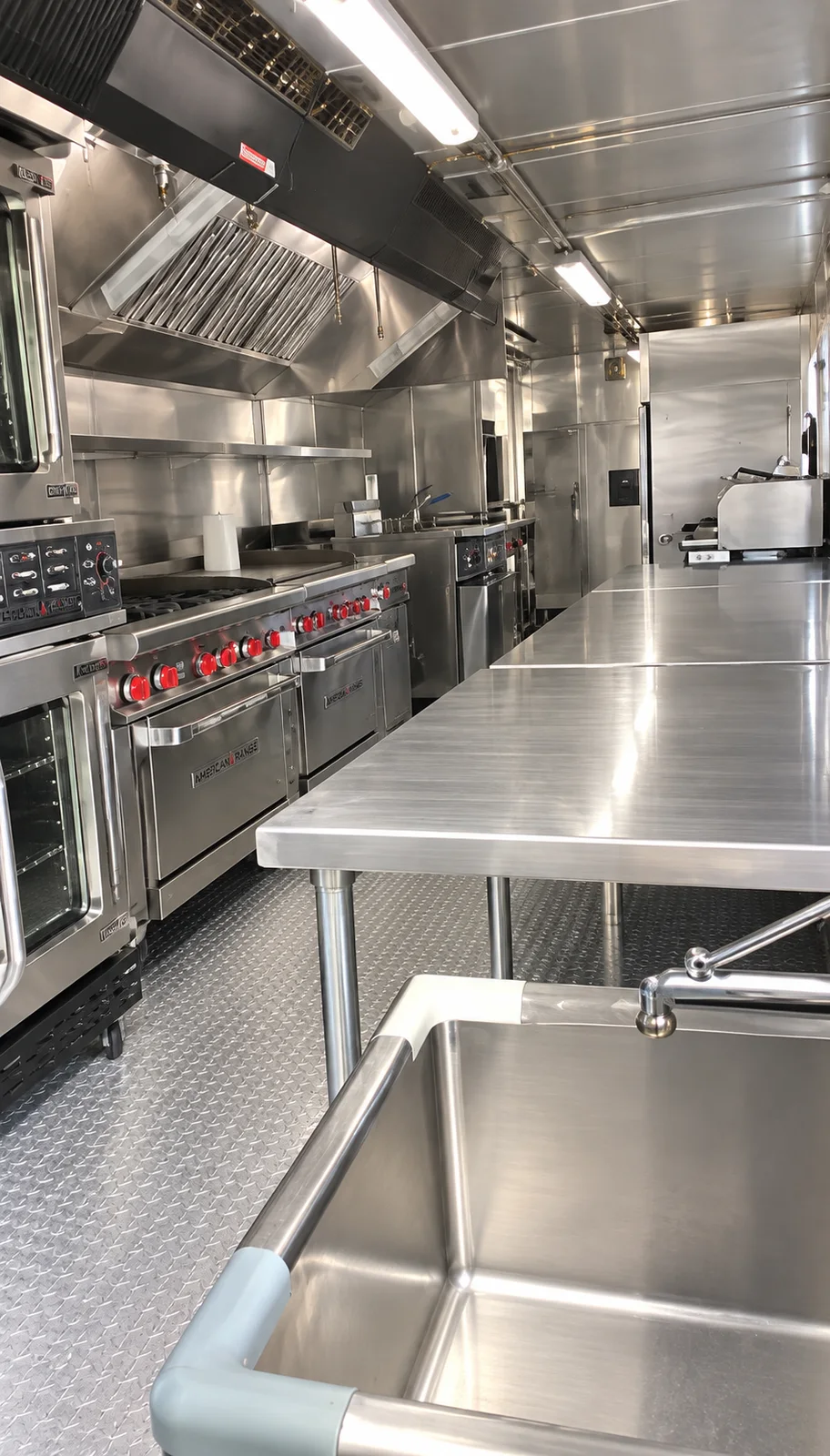
Review the longer footprint alongside the proposed site area. The equipment schedule, approach route, and connection points all belong in the same decision.
View kitchen detailsUse length to narrow the options, then compare the cooking line, storage and power example for your Alabama site. Models of the same length can have different equipment packages.
9 configurations to explore
Open the kitchen collectionThese are configuration examples. Your quote confirms the assigned unit, its equipment and the connections your site must provide.
The right starting question is what your team has to accomplish. Use these operating situations to shape the brief, then work through the equipment and site decisions for your Alabama address.
Before a work area closes, decide how each meal will reach the guest. A temporary kitchen plan can relocate the cooking work while the team keeps receiving, service, and dish return organized around the building project.
In Birmingham, start a restaurant brief with the menu you intend to keep serving and the work areas the renovation will remove.
For a Mobile hotel project, compare breakfast, banquet, and evening service demands before deciding which cooking functions need temporary space.
A Montgomery site plan should show where ingredients arrive and where used dishes return, as well as where the cooking trailer will stand.
In Huntsville, bring the contractor schedule and the food-service schedule into the same discussion so delivery access can be reviewed.
For a Tuscaloosa hospitality renovation, identify the changeover dates when staff will move between the permanent and temporary kitchens.
When the usual kitchen becomes unavailable, the first useful decision is what must operate next. Identify the meals, essential cooking tasks, and a possible placement area, then call to discuss the equipment and site requirements.
For an urgent Montgomery inquiry, have the address, the next required service time, and a site contact ready for the call.
In Dothan, separate the functions that remain usable from those that need replacement so the temporary request has a clear scope.
A Mobile response plan should account for the available power, water, and wastewater arrangements before a placement area is selected.
For Gadsden meal support, discuss the menu and the number of people working in the kitchen during the busiest preparation period.
In Birmingham, identify who can confirm site access and coordinate the food-service handoff while the equipment options are reviewed.
A campus or care facility has a timetable that construction cannot simply erase. Build the temporary plan around the actual service periods, dietary work, and staff movement, then compare the cooking and support equipment needed to carry it out.
For Birmingham institutional projects, record each meal period and the preparation tasks that must happen before it.
In Auburn, include the return to regular dining in the rental calendar so the changeover can be discussed alongside the closure.
A Tuscaloosa campus brief should explain how ingredients, staff, and finished meals move between temporary and permanent spaces.
For Huntsville education and care sites, identify any separate preparation or storage needs before comparing a kitchen floor plan.
In Montgomery, review how dishes return after service and whether washing needs its own temporary facility.
An event may serve most of its meals in a short period. Work backward from that window: decide what arrives prepared, what must be cooked on site, and where staff will stage food, collect supplies, and handle the cleanup.
For a Mobile event, mark the route from the kitchen to the serving point and keep it in view when discussing placement.
A Birmingham catering brief is more useful when it includes the menu, service times, and the appliances needed at the busiest moment.
In Gulf Shores, include ingredient delivery and cold-storage access in the event plan alongside the cooking area.
For a Huntsville gathering, account for setup, service, and cleanup when deciding the equipment and rental dates.
In Florence, discuss how catering staff, supplies, and waste will move around the proposed temporary kitchen.
A worksite kitchen needs to fit the crew schedule and the changing use of the site. Start with shift handovers and supply deliveries, then plan cooking, storage, and washing space where they can remain useful throughout the rental.
For a Decatur crew site, identify the overlap between shifts and the meals that need to be prepared during that period.
In Anniston, keep the delivery approach and the crew’s route to meal service on the same site sketch.
A Dothan project brief should note whether later phases of work could change the kitchen placement or access route.
For Gadsden operations, describe ingredient deliveries and storage needs so the cooking area can be considered with its supporting facilities.
In Florence, bring the expected crew calendar to the rental discussion and identify dates that may need a later review.
Give the rental conversation a purpose. Explain the workload, show where it happens, and identify what the site already provides. Those details help you compare the offered configurations on practical terms.
Use the actual menu to explain which tasks need a burner, oven, griddle, or another appliance. The discussion can then focus on the equipment your busiest service requires.
The kitchen, cold storage, dish return, and serving point have to work together. A simple sketch helps reveal long carrying routes or crossings that deserve another look.
Bring what you know about power, water, wastewater, placement, and access. Flag the unknowns so they can be resolved with the people responsible for the site.
Review the offered unit, rental dates, transport, setup, and responsibilities as one scope. Equipment availability and delivery arrangements are confirmed for the project.
For a school, care facility, or public operation, write down the service timetable before selecting equipment. Include the people, preparation requirements, dish returns, and approvals that shape the temporary setup.
A workable brief explains the service you must provide and the place where it will happen. Start with your menu and operating calendar, then bring the proposed placement area and known connections into the discussion. For an urgent kitchen inquiry, call (562) 205 8280 for 24/7 support.
List the menu, meals per service, staff working at once, and the dates when the temporary kitchen needs to operate.
Use the offered floor plan to review staff movement, supporting facilities, connections, access, and the approvals the site needs.
Review the equipment schedule, dates, delivery, setup, site preparation, and collection responsibilities before scheduling the rental.
A location guide gets the conversation started. The address, working hours and connections available on the ground shape the setup that follows.
Select a city marker to plan your rental. Choose a regional view for a closer look.
Open a guide for your location, then bring the actual placement area and utility details into the rental discussion.
Alabama
Equipment, transport and setup are confirmed against your dates and the site itself.
Plan a rental in Birmingham See the Alabama overview Call (562) 205 8280Browse all 463 incorporated Alabama cities and towns. Each guide brings the equipment choices, starting rates and preparation questions together.
463 Alabama municipalities
Incorporated city and town names: U.S. Census Bureau, 2025 Gazetteer. For other Alabama communities, share the project address to start your rental discussion.
Call (562) 205 8280 with the address, the next meal service you need to provide, and a site contact. Explain which cooking, washing, or storage functions are unavailable. The team can then review the equipment options and practical delivery requirements; timing depends on availability and site readiness.
Begin with the menu and the equipment used during the busiest meal period. Include staff working at once, preparation space, and the route to food service. Use the model pages to compare layouts, then confirm the offered configuration against that workload.
The approach route, placement area, available power, potable water, wastewater handling, and fuel requirements all need review. Local approvals and the access arrangement also belong in the plan. Check them against the selected unit before scheduling delivery.
The kitchen family includes a stove, an oven, and essential cooking utensils. The appliance package varies by model. Bring any additional cooking or preparation requirements to the discussion and confirm the equipment schedule for the unit being offered.
Consider separate facilities when the permanent washing or storage area is unavailable, or when putting those tasks in the cooking space would interrupt the work. Compare their capacities, placement, connections, and available equipment as part of the same site plan.
Use them to compare the displayed equipment options and prepare an initial budget. The quote still needs to establish the selected unit, rental period, delivery, setup, site work, taxes, and availability. Review supporting facilities according to the equipment requested.
Bring the address, menu, and dates. Tell us which functions need temporary space and which site details remain unanswered. We can discuss the equipment options and the scope the quote needs to cover.
(562) 205 8280 Equipment and timing reviewed for your Alabama address