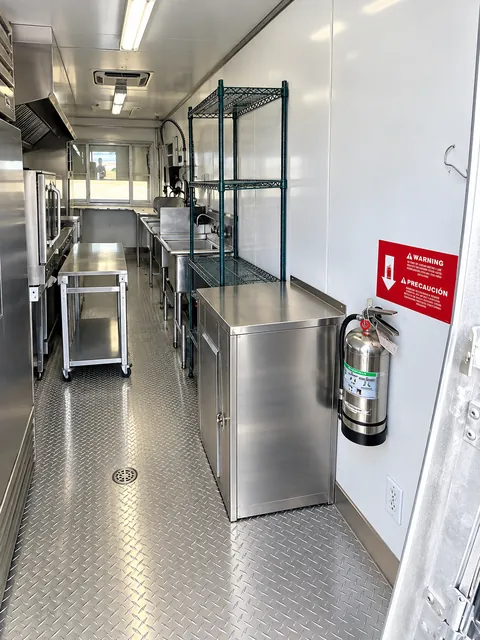
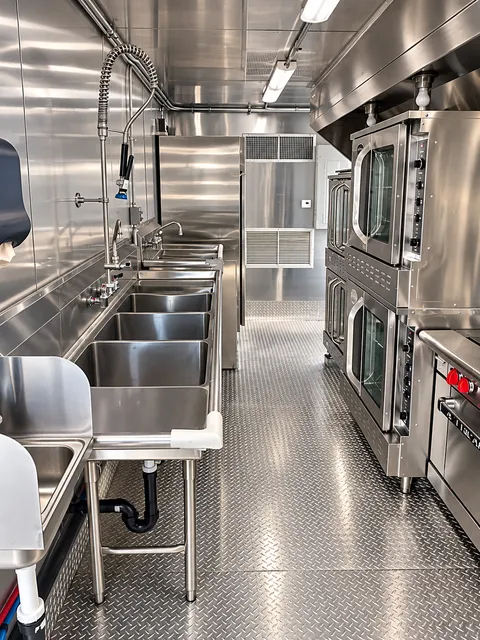
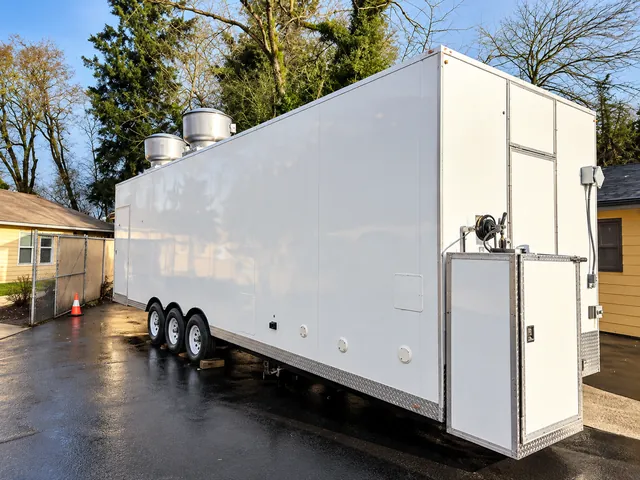
Some kitchens need a batch workflow rather than a row of separate menu stations. The 26ft Baby Bulk provides cooking and preparation areas with washing and cold storage nearby. Use a typical batch, from ingredient handling to finished pans, to explain what the temporary kitchen needs to do.
Its support package includes a three-compartment sink, handwashing sink, mop sink, preparation table, reach-in refrigerator and freezer, and water heater. The hot equipment shown is a starting point for the conversation; the current appliance schedule establishes the cooking stations, quantities, and capacities offered.
Talk through one complete batch
Tell us what arrives raw, what is prepared at the table, which cooking method follows, and how the finished food is collected. Include pan sizes and jobs that overlap so the oven, skillet, and other requested stations can be assessed together.
Keep pans and ingredients moving
A batch plan includes more than the appliance doing the cooking. Consider where ingredients wait, where hot pans are set down, and how utensils return for washing. Check those steps against the available floor plan before deciding on the unit.
Questions about this model
Which hot appliances will we receive?+
Ask for the appliance schedule for the unit being quoted. It should identify the oven, skillet, other cooking stations, and their capacities so your production team can make a practical comparison.
What supports preparation and cleanup?+
The listed package includes a preparation table, three-compartment sink, handwashing and mop sinks, reach-in refrigerator and freezer, and water heater. Match these functions to your working sequence.
Does Baby Bulk mean a fixed number of meals?+
The name describes the format. Batch size, menu, staffing, and the offered appliance package determine what can be produced during your service schedule.